.jpg)

UVB Phototherapy
3 items
-
 Add to Favorites
Best Seller
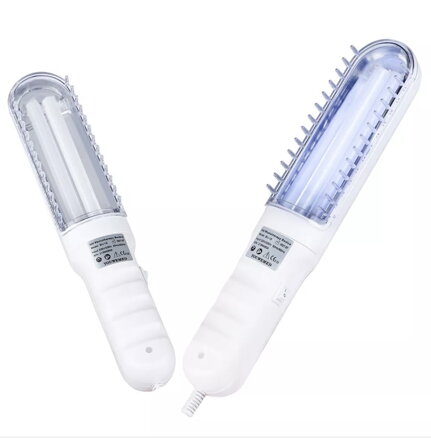
Philips BU-1S-US UVB Lamp
(1400051)Special Philips UVB lamp for at‑home treatment of vitiligo. Portable, durable and easy to operate. Unique comb‑head design for treating the scalp and body.
In stock (48 pcs)
$220
-
 Add to Favorites
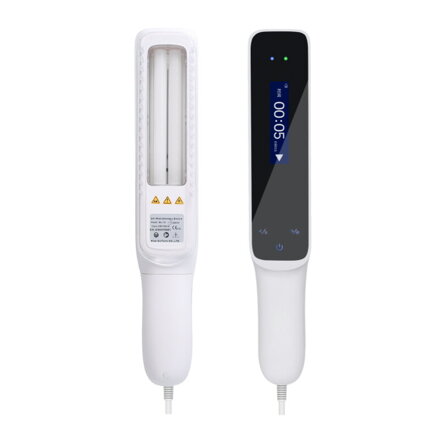
Philips BU-10-US UVB Lamp
(1400052)Special Philips UVB lamp designed for the treatment of vitiligo and psoriasis. The LED touchscreen with built-in timer ensures precise and easy control, making it ideal for safe at-home UVB phototherapy.
In stock (20 pcs)
$332
-
 Add to Favorites
New
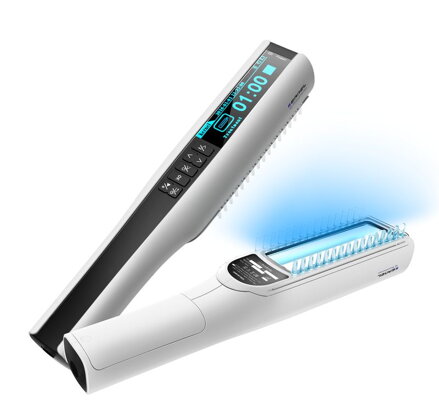
Kernel KN-4003BL2-US UVB Lamp
(1400053)KERNEL KN-4003BL2 is a modern handheld 311 nm narrowband UVB phototherapy lamp designed for convenient home treatment of vitiligo, psoriasis and other UV-responsive skin conditions.It uses a Philips PL-S 9W/01/2P NB-UVB bulb and features an OLED display, built-in treatment timer, integrated reflector and removable comb attachment for scalp treatment and maintaining the correct working...
preorder
$375
Which lamp should you choose?
Swipe to compare →
| BU-1S | BU-10 | Kernel KN-4003BL2 | |
|---|---|---|---|
| 311 nm NB-UVB bulb | ✓ | ✓ | ✓ |
| Digital display | — | LED touchscreen | OLED |
| Built-in timer | — | ✓ | Microcomputer |
| Comb attachment | — | — | ✓ |
| Best for | Starting out, small patches | Easy daily use, accurate dosing | Advanced usage, precise control |
| Warranty | 2 years | 2 years | 2 years |
Is phototherapy right for you?
UVB therapy is effective for most types of vitiligo, but results depend on how long you've had it, which areas are affected and how consistently you treat. These resources will help you decide:
How home UVB phototherapy works for vitiligo
Narrowband UVB (NB-UVB) at 311 nm is the most widely used light-based treatment for vitiligo and is considered the gold standard by dermatologists worldwide. Regular exposure works in two complementary ways: it dials down the overactive immune response that damages melanocytes, and it stimulates the surviving pigment cells — particularly those sheltered in hair follicles — to migrate back into depigmented areas and resume melanin production.
Unlike broad-spectrum UV or sunlight, the 311 nm wavelength targets only the wavelengths needed for repigmentation, minimising unnecessary UV load on surrounding skin.