.jpg)
Philips BU-10 UVB Lamp – Next-generation medical device with LED touchscreen for precise home phototherapy
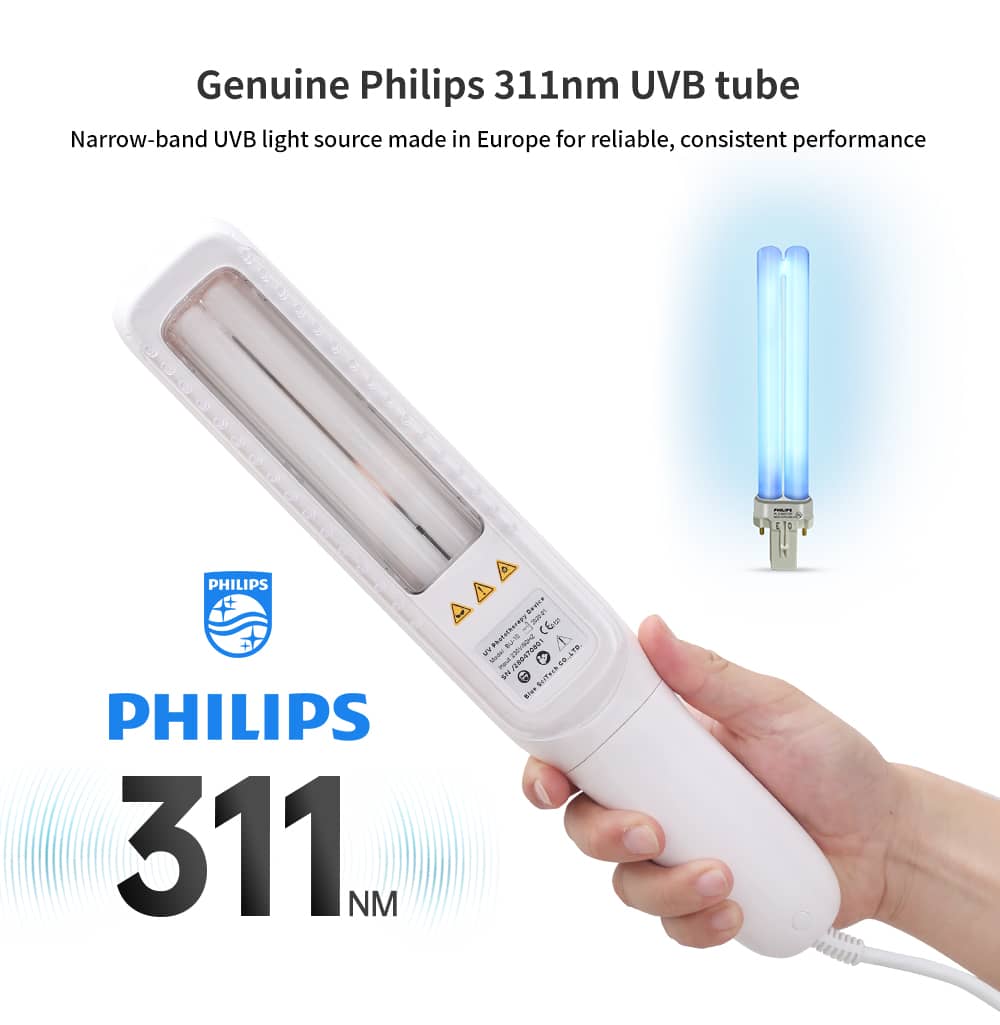
The Philips BU-10 emits a precise 311 nm narrowband UVB wavelength – the clinically validated spectrum for targeted treatment of vitiligo, psoriasis and eczema at home.
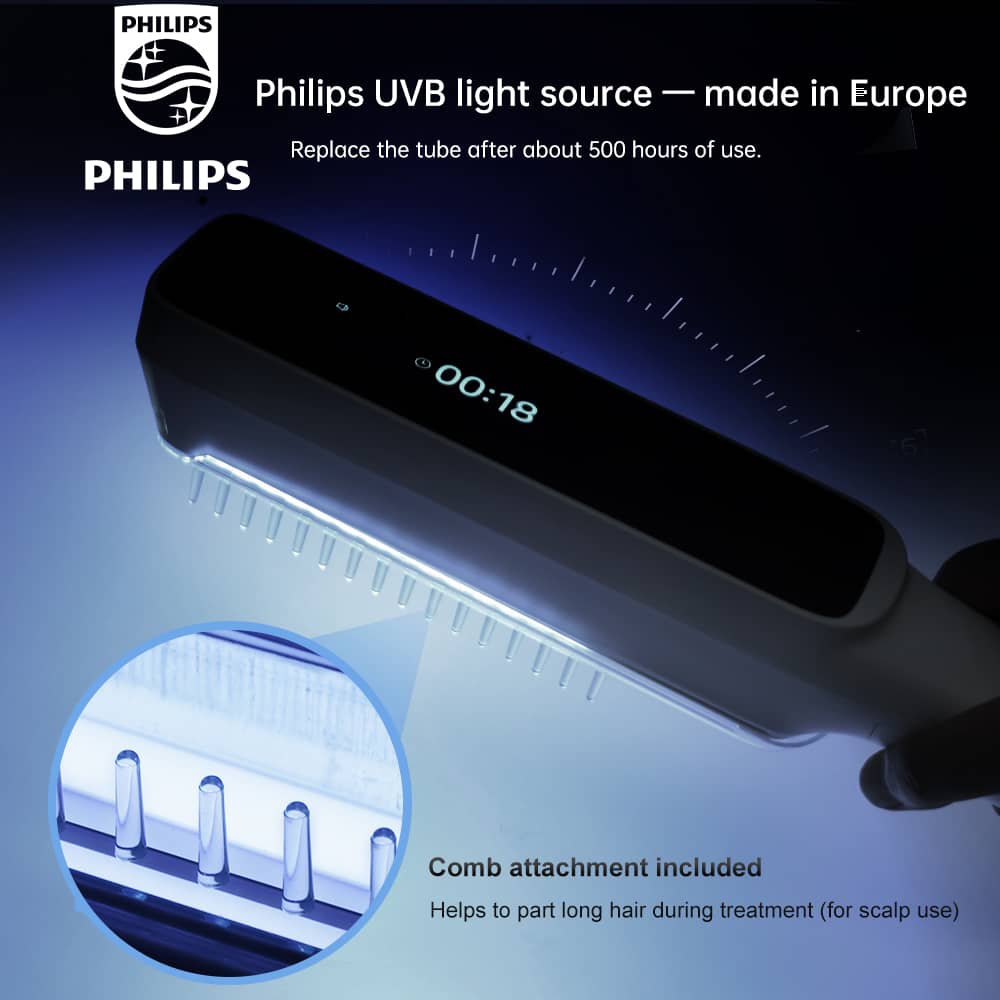
Equipped with a built-in LED touchscreen, automatic timer and dose control – professional-level phototherapy in the comfort of your own home.
Why customers choose Philips BU-10
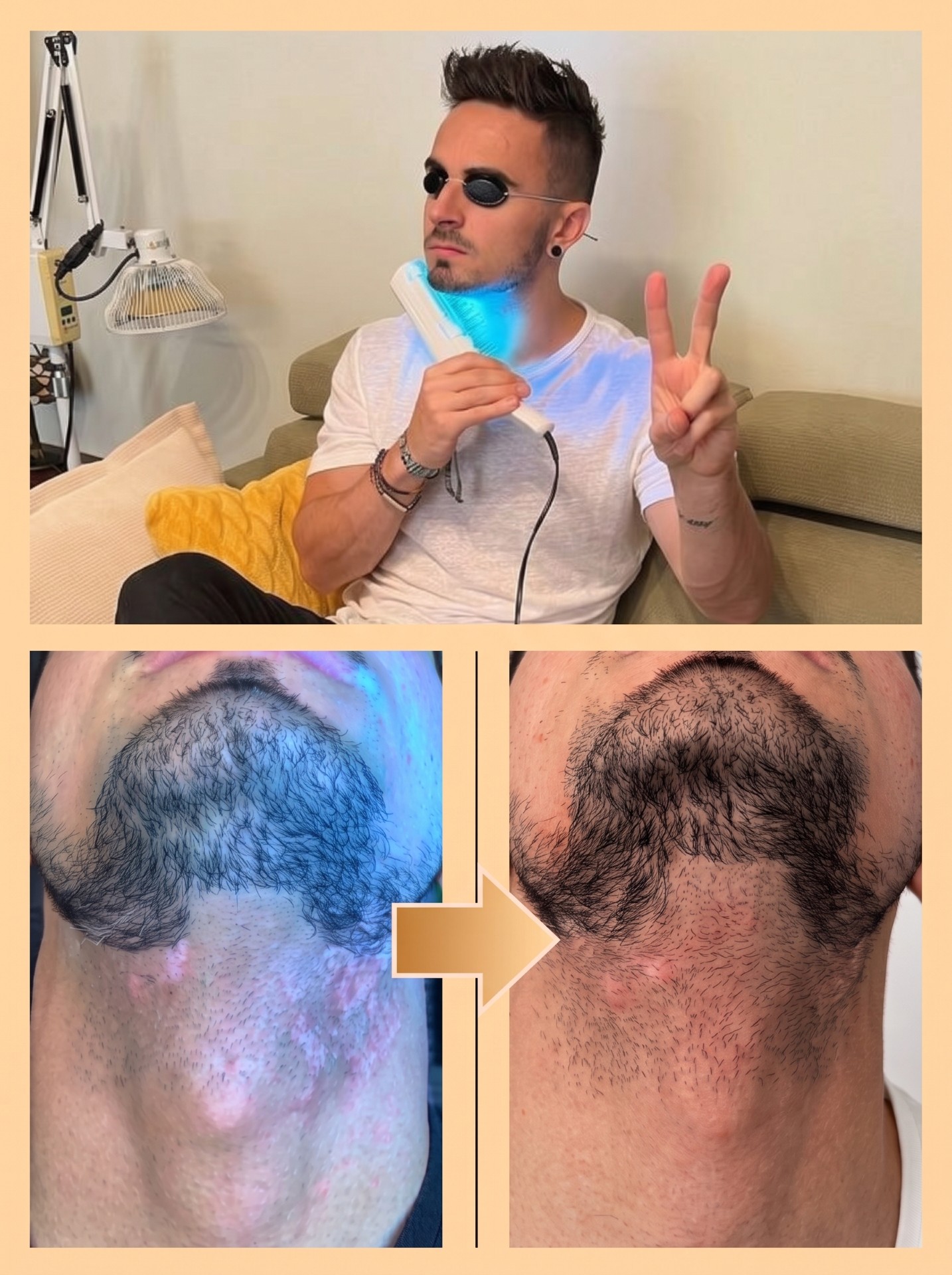
The Philips BU-10 is ideal for treating small to medium-sized areas. The comb attachment makes it especially effective for scalp psoriasis and difficult spots – elbows, knees, scalp and face.
Where vitiligo often responds best
Typical course of repigmentation
Technical Specifications
| Device specifications | |
|---|---|
| Parameter | Value |
| Model | Philips BU-10 |
| Spectrum | NB-UVB 311 nm |
| Irradiance | 0.3 – 20 mW/cm² |
| Modes | Time (0–30 min) & Dose (0–5 J/cm²) |
| Light source | 1× 9W Philips UVB tube |
| Working distance | 3 cm |
| Dimensions | 335 × 57 × 50 mm |
| Weight | 0.98 kg |
| Power supply | 120V / 60Hz (US plug) |
| Warranty | 2 years |
| Manufacturer | YouWeMed |
Package Contents
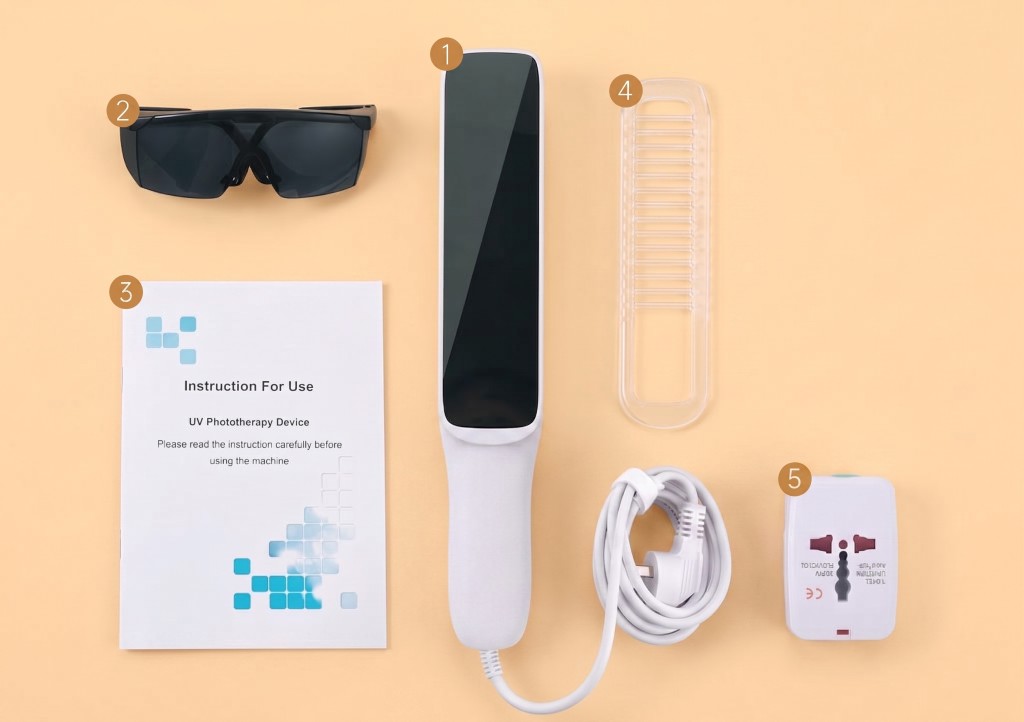
What is Included
| ① | UVB instrument (Philips BU-10) |
| ② | Comb attachment |
| ③ | Safety goggles |
| ④ | Instructions for use |
Usage and Safety Information
Preparing for your first treatment
- Plug in the mains lead and switch the unit on.
- Recommended initial exposure time:
- Adults: 30 seconds
- Children: 15 seconds
How to use Philips BU-10
- Treat 2–3 times per week with a minimum of one rest day between sessions.
- Only treat when any redness (erythema) from the previous session has fully faded and the skin has recovered.
- Use the touchscreen to select either Time mode (0–30 min) or Dose mode (0–5 J/cm²) for precise treatment control.
- For scalp treatment, attach the comb head to part the hair and bring the UVB light closer to the skin.
- For best results, treat each area for approximately 3–4 minutes depending on skin type.
Skin reaction (erythema) guide
Redness typically appears 6–8 hours after treatment:
- No redness: Increase exposure time by 20 seconds for the next session.
- Mild redness: If it fades within 24 hours, increase time by 20 seconds for the next session.
- Moderate redness (target response): If skin still looks pink after 24 hours, wait until it has fully faded before treating again.
- Strong redness: If redness has not cleared within 2 days, pause treatment until skin returns to normal, then reduce exposure time by 20%.
Certifications & Regulatory Compliance
The Philips BU-10 is a certified medical device manufactured by YouWeMed, confirming compliance with medical device safety and quality standards.
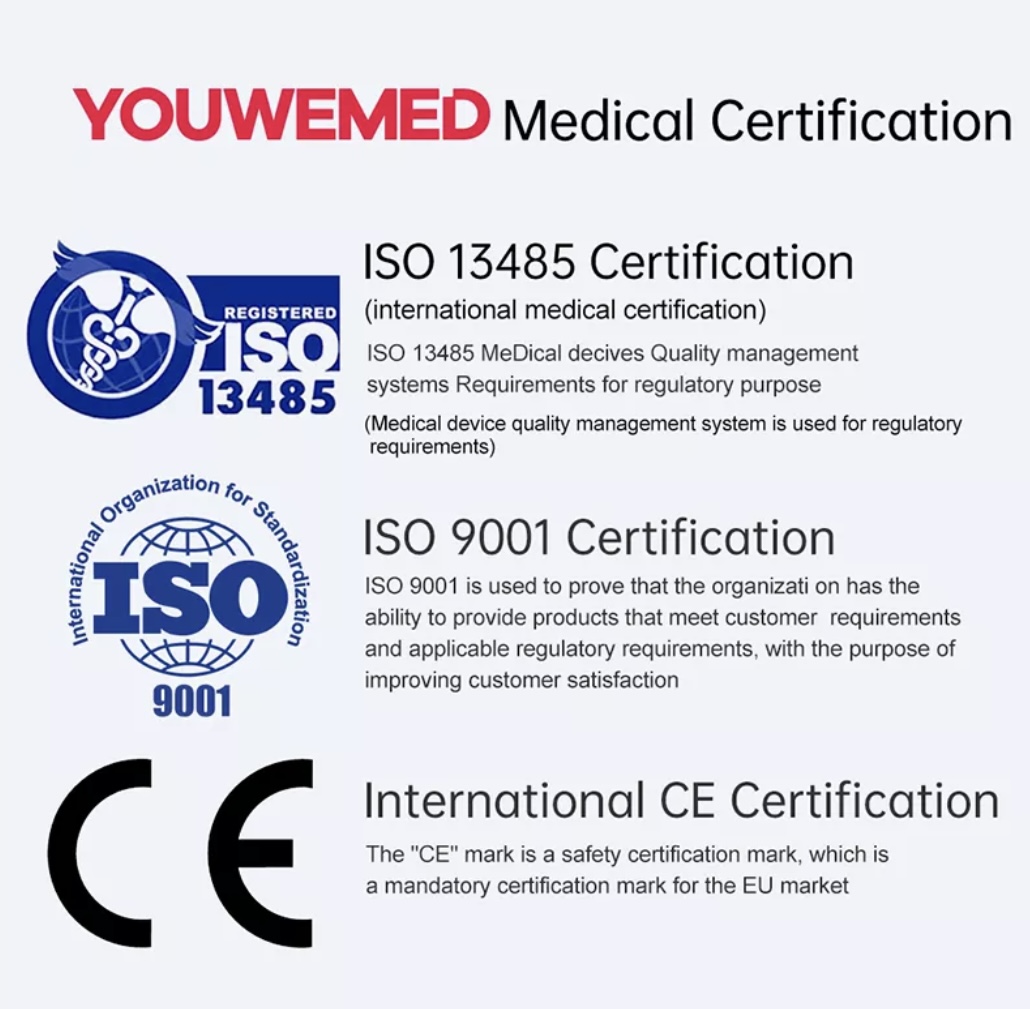
Medical Device Certificate
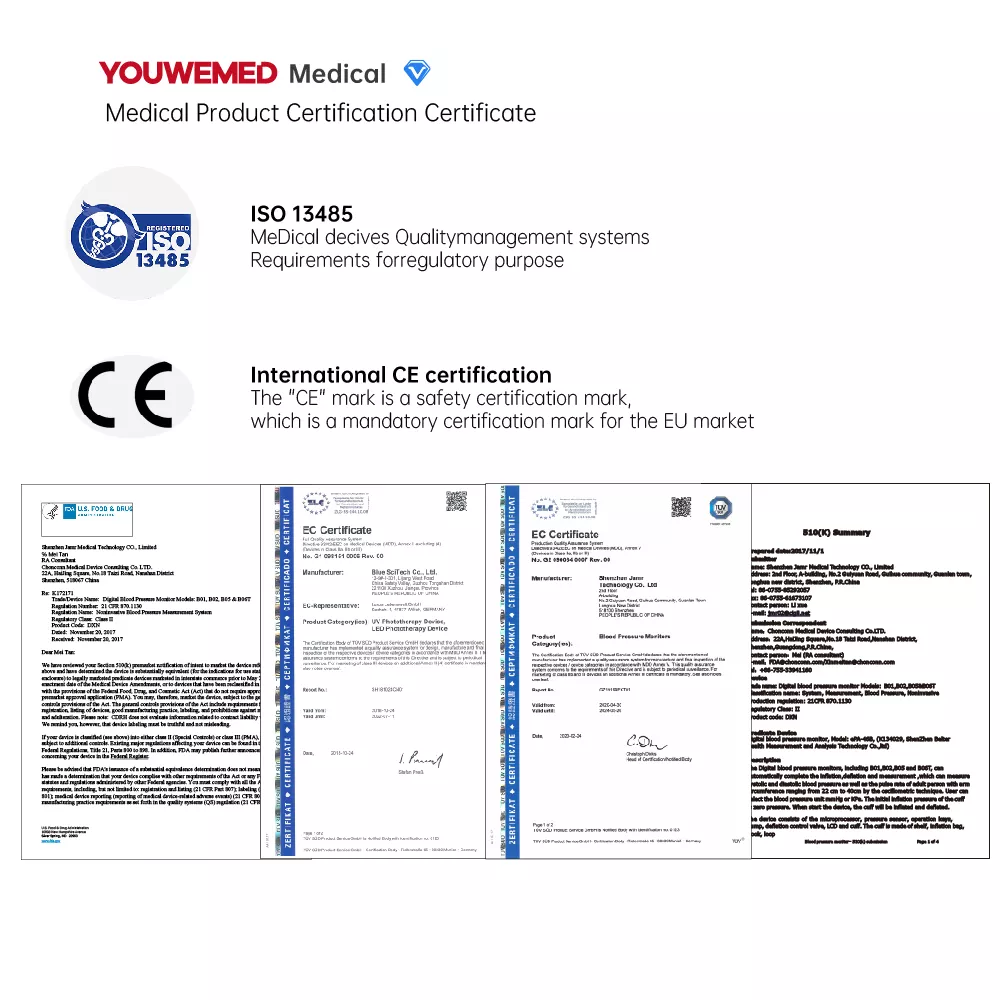
Quality & Safety Compliance
Frequently Asked Questions
Answers to the most common questions about using the Philips BU-10 for vitiligo and psoriasis phototherapy at home.
Is the Philips BU-10 suitable for scalp psoriasis?
Yes. The Philips BU-10 includes a comb attachment that helps to part the hair and bring the 311 nm NB-UVB light closer to the scalp. Treat small areas at a time and always wear the supplied UV-protective goggles.
How often should I use the Philips BU-10 for psoriasis?
Treat 2–3 times per week with at least one rest day between sessions. Do not treat the same area more than once per day. Only increase exposure time when any redness from the previous session has completely settled.
Can I combine the BU-10 with topical psoriasis creams?
Yes. Many patients use NB-UVB alongside topical treatments. Neutral moisturisers can be applied after each session once the skin has cooled. Some active ingredients (corticosteroids, retinoids, salicylic acid) may increase photosensitivity — always follow your dermatologist's advice.
How long until I see improvement in psoriasis?
Many patients begin to notice smoother, less red plaques after 4–8 weeks of consistent NB-UVB therapy. Results vary between individuals — patience and regular treatment are key.
Is the Philips BU-10 suitable for vitiligo?
Yes. The BU-10 uses 311 nm narrowband UVB — the standard wavelength used in dermatology clinics for vitiligo phototherapy. It is designed for treating small to medium-sized patches on the face, hands and body.
How often should I use the BU-10 for vitiligo?
Use 2–3 times per week with at least one complete rest day between sessions. Increase exposure time only when the skin has fully recovered and there is no persistent redness from the previous session.
How long does repigmentation take in vitiligo?
Repigmentation is usually gradual. Many patients need at least 2–3 months to see the first small pigment freckles, and meaningful improvement often takes 6–12 months. Face and neck tend to respond faster than hands and feet.
Can I combine the BU-10 with topical creams for vitiligo?
Yes. NB-UVB is often combined with topical therapies such as calcineurin inhibitors. Apply creams after the UVB session on cooled, dry skin. Some products increase photosensitivity — always follow your dermatologist's instructions.
What do the Time and Dose modes do?
Time mode sets a fixed treatment duration (0–30 min) with automatic shut-off. Dose mode delivers a precise UV dose in J/cm² (0–5 J/cm²), which is particularly useful for following a dermatologist-prescribed protocol.
Is NB-UVB therapy suitable for children?
Yes, but only under paediatric dermatology supervision and with individually adjusted exposure times. The starting time for children is 15 seconds.


$332



New comment