
Philips BU-1S-US UVB Lamp – compact handheld phototherapy device for home use
The Philips BU-1S emits a precise 311 nm narrowband UVB wavelength – the clinically validated spectrum for targeted treatment of vitiligo, psoriasis and eczema at home.
- Vitiligo – stimulates the remaining pigment cells in and around the white patches, so the skin can gradually produce its own color again.
- Psoriasis – slows the overly fast growth of skin cells and calms inflammation, helping reduce scaling, redness and plaque thickness.
- Eczema – calms the overactive immune response in the skin, easing itching and inflammation.
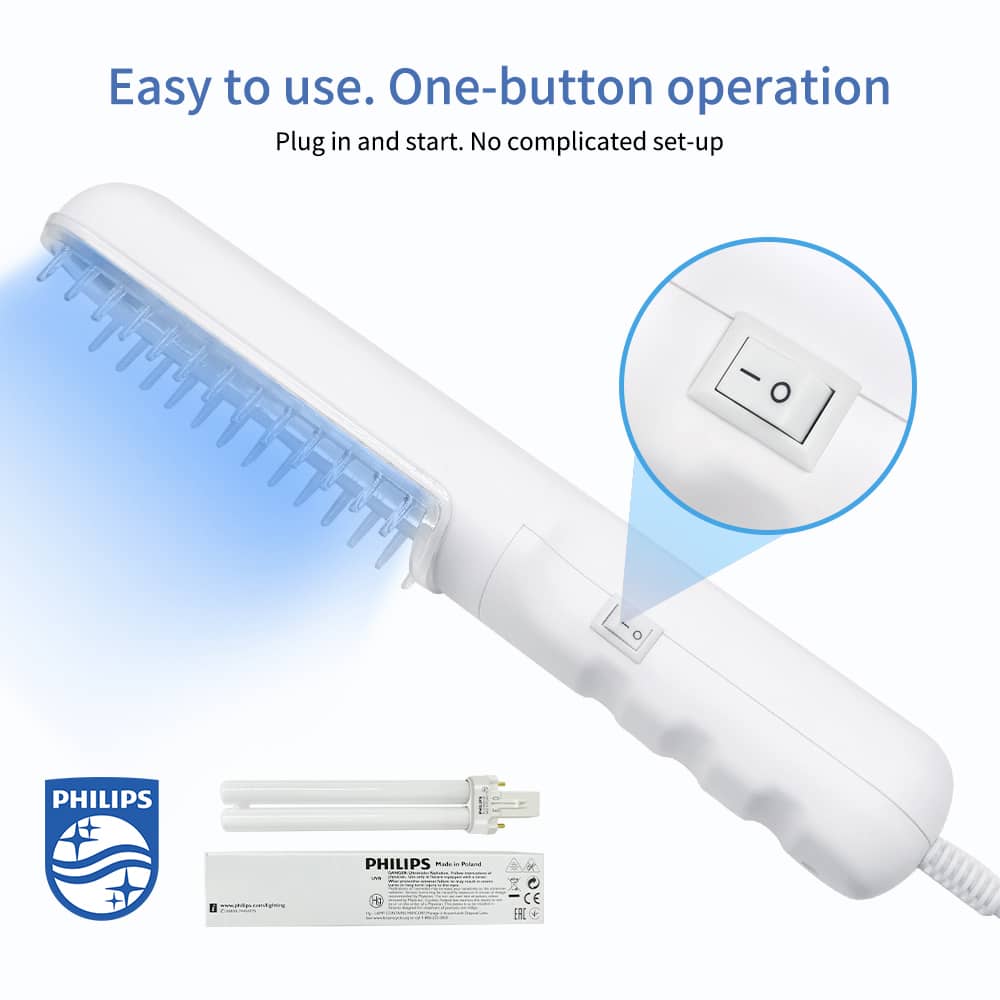
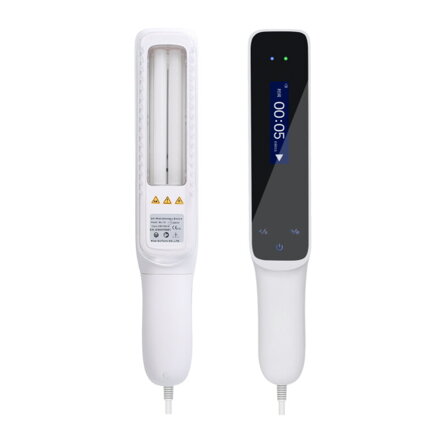
Simple by design: no display and no settings to learn – just switch it on and off. That makes the BU-1S an ideal first lamp if you are just starting UVB treatment at home, or if you simply don't want to deal with technology. It delivers the same 311 nm light as our more advanced lamps – at an unbeatable price.
Compact and lightweight – treat affected areas precisely, without regular clinic visits.
Want to see all the specifications? Open the Parameters tab →
Why customers choose Philips BU-1S
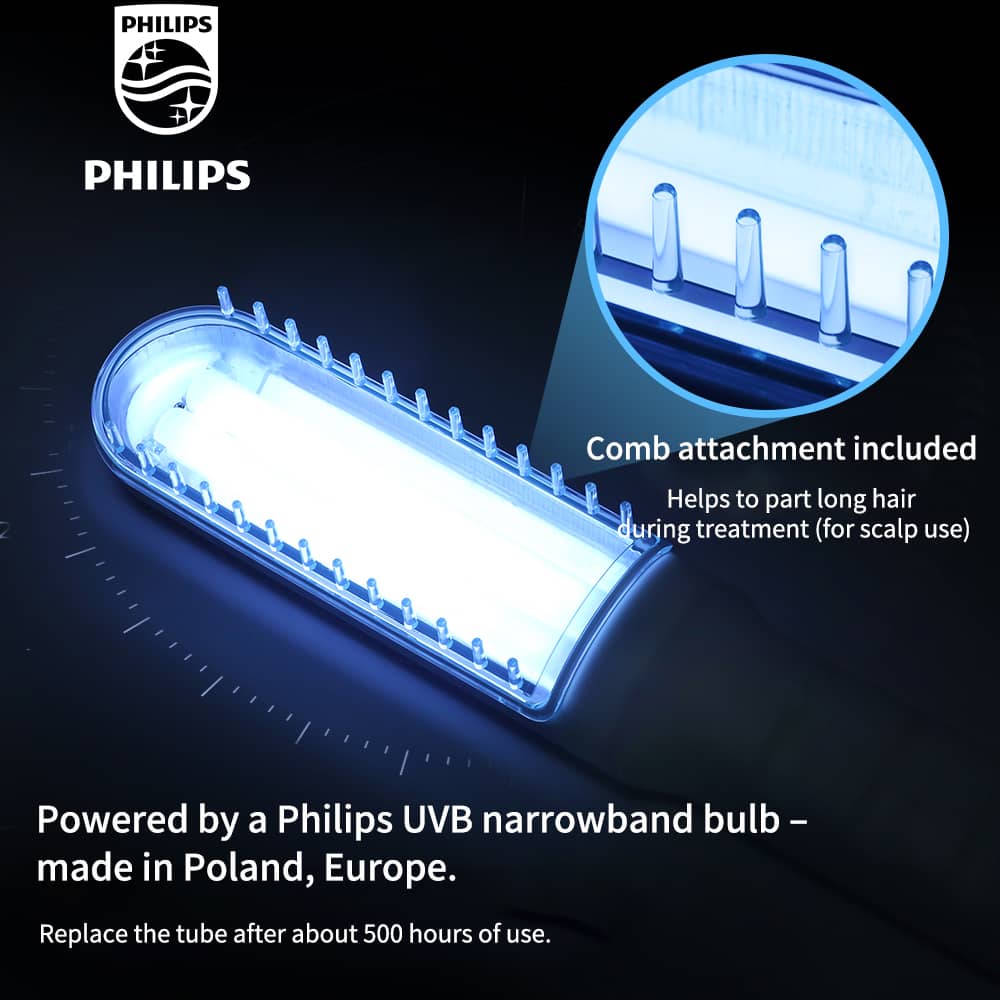
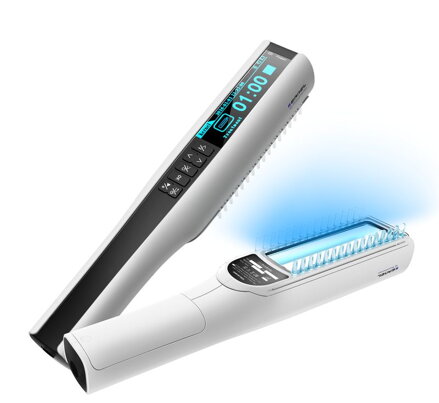
The handheld design lets you treat exactly where you need it – from a single patch on the face to larger areas on the arms, legs or torso, which you simply treat section by section. The built-in comb brings the light through the hair to the scalp.
A certified medical device – see the certificates →
How UVB phototherapy works
An overactive immune response in the skin can contribute to inflammation or damage pigment-producing cells, depending on the condition.
Narrowband UVB light acts mainly in the upper layers of the skin, helping regulate local immune activity.
With a prescribed course of treatment, UVB may reduce redness, scaling and itching in psoriasis and eczema. In vitiligo, it can also stimulate remaining pigment cells and support repigmentation.
Illustration is simplified. Results vary by condition and individual. UVB phototherapy should follow medical guidance.

How to use Philips BU-1S
- Plug in the mains lead and switch the unit on.
- First session: adults 30 seconds, children 15 seconds.
- Treat 2–3 times per week, at least one full day apart, and only when any redness from the previous session has fully subsided.
Check your skin 6–8 hours after exposure:
| No redness | Increase the exposure time by 20 seconds at the next session. |
|---|---|
| Mild rednessdesired response | Still slightly pink after 24 hours? Keep the same time and wait until it has completely faded before treating again. |
| Marked redness | Pause until the skin is back to normal, then reduce the exposure time by 20%. |
Typical exposure per spot: about 3–4 minutes, depending on skin type.
Read the full light therapy guide → or find more answers in the FAQWant a personalised assessment and a complete treatment plan?
Take the short quiz →Technical Specifications
| Device specifications | |
|---|---|
| Parameter | Value |
| Model | Philips BU-1S |
| Spectrum | NB-UVB 311 nm |
| Irradiance | ≥ 7 mW/cm² |
| Dimensions | 300 × 55 × 45 mm |
| Weight | 480 g |
| Power supply | 120V / 60Hz (US plug) |
| Manufacturer | YouWeMed |
Package Contents
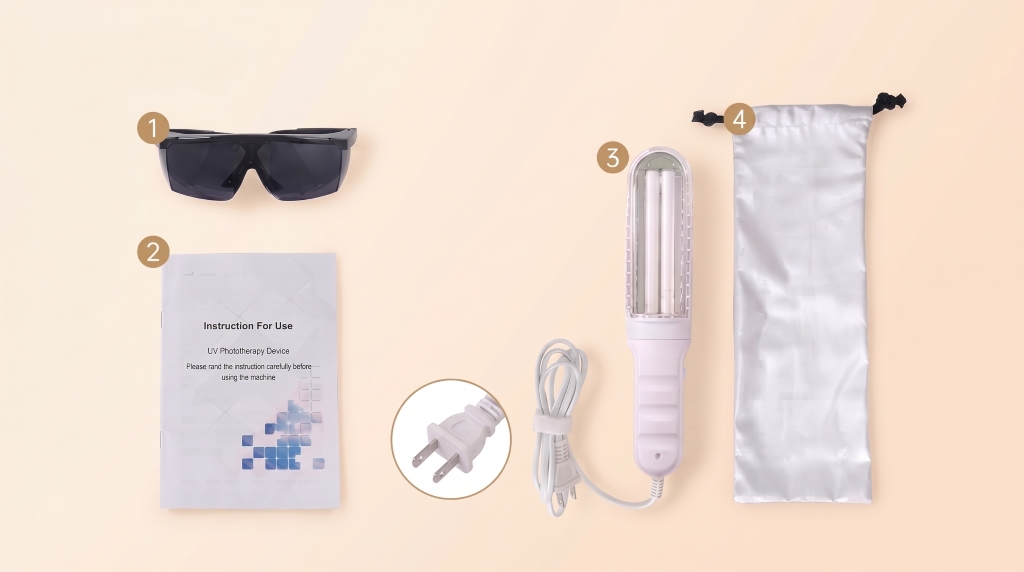
What is Included
| ① | Safety glasses |
| ② | Instructions for use |
| ③ | UVB instrument (Philips BU-1S) |
| ④ | Travel bag |
Certifications & Regulatory Compliance
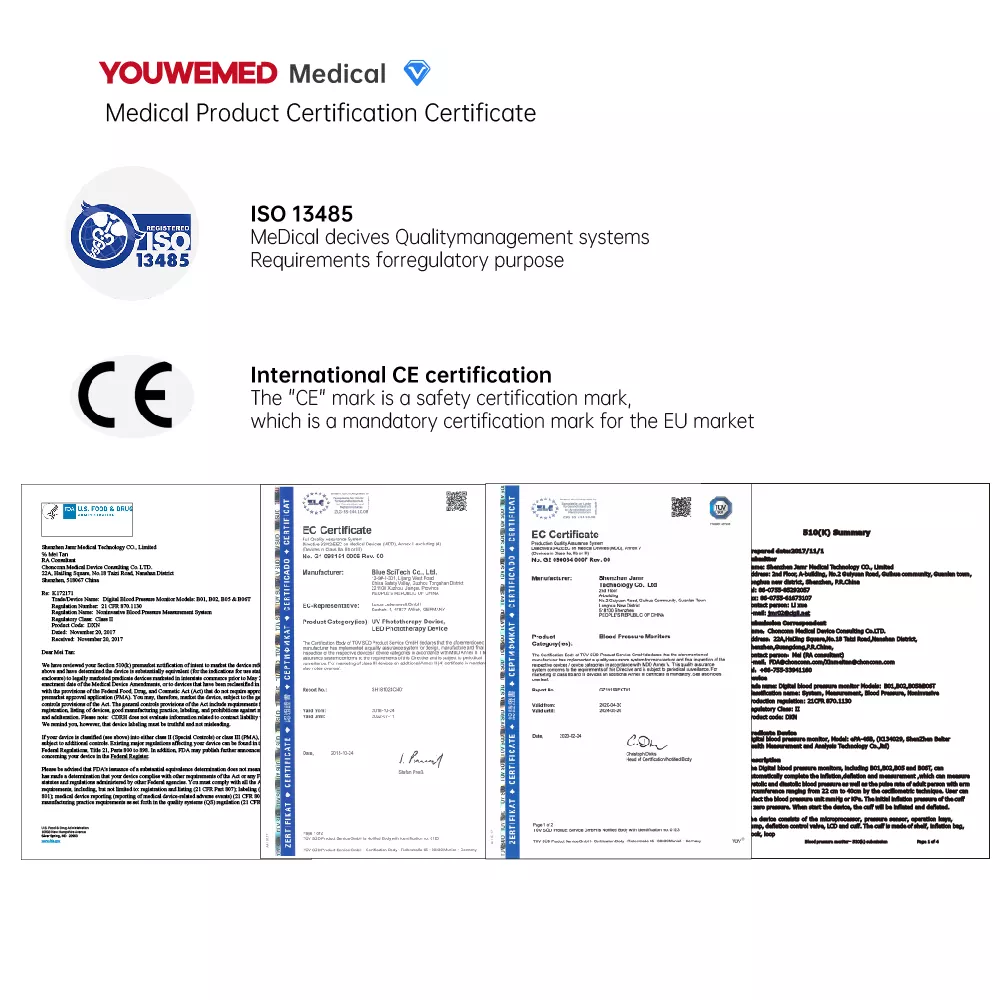
The Philips BU-1S is a certified medical device manufactured by YouWeMed, confirming compliance with medical device safety and quality standards.
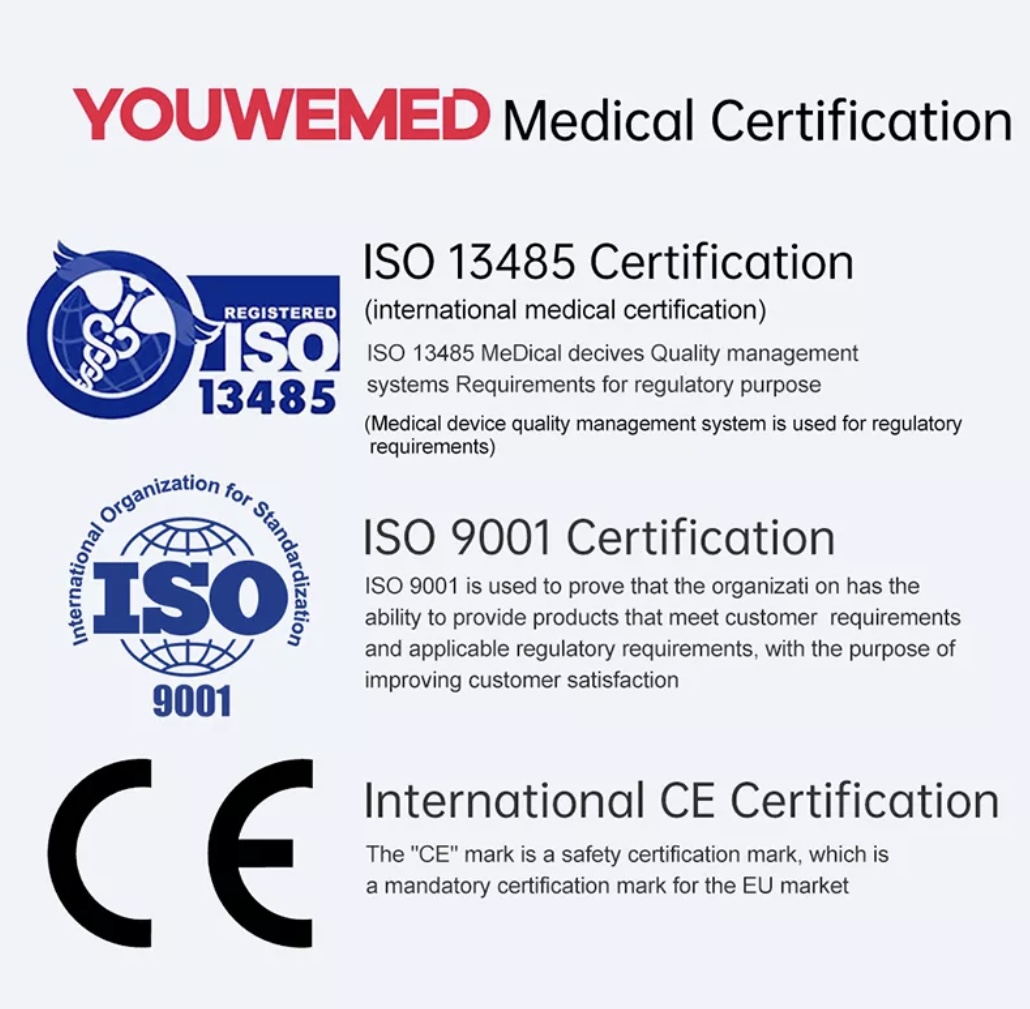
Medical Device Certificate
Quality & Safety Compliance
Frequently Asked Questions
Answers to the most common questions about using the Philips BU-1S for at-home phototherapy.
When can the first results be expected?
Fresh vitiligo patches often respond more quickly. The first visible changes may appear after a few weeks and, in many cases, within 1–3 months of regular treatment.
How often should I use the Philips BU-1S?
Treat 2–3 times per week with at least one full day of rest between sessions. Never treat the same area twice in one day.
Are protective goggles required during treatment?
When treating the face or areas near the eyes, protective goggles should always be worn. The goggles are included in the package.
Can the area around the eyes be treated?
Only with closed eyes, very short exposure times and particular caution. For this sensitive area, medical advice is recommended if in doubt.
Is NB-UVB therapy suitable for children?
Yes, but only under pediatric dermatology supervision and with individually adjusted exposure times. The starting time for children is 15 seconds.
Can I combine the lamp with topical creams?
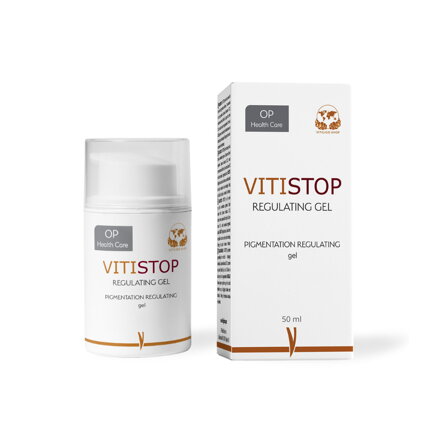
Yes, combining it with Vitistop Gel is often recommended to further support repigmentation.
Can I use the lamp during summer?
Yes, provided the treated areas have not also been exposed to strong sunlight on the same day. Avoid combining NB-UVB therapy with intense natural UV exposure.
What should I do if skin irritation occurs?
Pause treatment temporarily and allow the skin to settle. Only resume once the irritation has fully subsided, using a reduced exposure time.
Why is there no redness at the beginning?
Initial exposure times are intentionally kept short. The aim is a mild erythema appearing a few hours after treatment and fading by the following day. If this does not occur, increase the exposure time by 20 seconds at the next session.
Is NB-UVB suitable during pregnancy or breastfeeding?
Yes, but only after medical advice. NB-UVB may affect folic acid levels, so individual medical guidance is advisable.


$218.50


New comment