Not every case of white patches on the skin, white spots, or skin losing color is vitiligo. Several other pigmentary disorders produce similar skin discoloration or depigmentation — and correctly identifying the condition is crucial for choosing the right treatment. Below we cover the most common skin pigmentation disorders that can be mistaken for vitiligo.
1. Pityriasis Versicolor Alba

Pityriasis versicolor (also called tinea versicolor) is the condition most frequently confused with vitiligo. It is caused by the skin yeast Malassezia furfur, which normally lives on the surface of healthy skin and feeds on sebum. The infection produces round or oval spots, approximately 0.5–2 cm in size, that appear lighter than the surrounding skin. These spots can occur anywhere on the body but are most common in areas of increased sweat production — the back, shoulders, trunk, and neck.
The spots may be dry, scaly, and itchy, and often become more visible after sun exposure, as the affected areas do not tan. Treatment uses topical creams, solutions, or medicated shampoos. Pigmentation loss may persist for weeks to months after the infection clears, and recurrence is common in warm, humid conditions.
2. Piebaldism

Piebaldism is a rare congenital and hereditary condition affecting approximately 0.001% of the population. Its hallmark is a depigmented or white patch of skin — or a white streak of hair — that is present at birth. The abdomen, chest, and limbs may also be affected. Unlike vitiligo, piebaldism is not an autoimmune disease, does not involve the eyes (as albinism does), and the spots typically remain stable throughout life. Minor repigmentation is possible but uncommon. It is caused by genetic mutations that affect melanin production.
3. Nevus Depigmentosus

Nevus depigmentosus is a light birthmark that appears in the first months of life and grows proportionally with the person, without changing in character. Unlike segmental vitiligo — which is also stable but typically appears later — nevus depigmentosus is present from birth or early infancy and has sharper, more defined edges.
The key distinction from vitiligo: the affected skin is lighter, not white, and the spot does not grow or change over time. Vitiligo spots, by contrast, are often bright white and tend to enlarge or multiply over time. An experienced dermatologist can usually distinguish the two on visual examination alone.
4. Albinism

Albinism is caused by the congenital absence of the enzyme tyrosinase, which is required for melanin production. Without melanin, skin, hair, and eyes lose their pigmentation. Characteristic features include colorless or very pale skin and hair, and often pink or red-tinted eyes — the color comes from blood visible through the capillaries. People with albinism have significantly increased sensitivity to UV radiation and a higher risk of developing skin tumors, as well as accelerated skin aging. Albinism can affect humans, animals, and plants.
5. Halo Nevus

A halo nevus (also called Sutton's nevus) forms when the immune system targets a mole and destroys the pigment cells in the surrounding skin, leaving a pale ring or halo. Halo nevi are common in people with vitiligo and are considered one of its manifestations. The immune attack may lighten the mole itself from dark to pink, or eliminate it entirely — though in some cases, white memory T-lymphocytes remain at the site and prevent full repigmentation.
In children, halo nevi often resolve spontaneously over time. In adults, they are more likely to be permanent. Halo nevi also occur in association with malignant melanoma, so any new or changing moles should be monitored by a dermatologist. They are present in approximately 1% of the population.
6. Nevus Anemicus

Nevus anemicus is a congenital disorder characterized by pale patches of skin that do not redden in response to pressure, cold, or heat. Unlike most pigmentary disorders, the paleness is not caused by a loss of melanin — it results from chronically constricted blood vessels in the affected area, reducing local blood flow. The spots are often difficult to notice against the person's normal skin tone, but become clearly visible when the surrounding skin reddens during sun exposure or physical activity.
A useful diagnostic test: rubbing the affected area causes the surrounding skin to flush red, while the nevus anemicus patch remains pale and unchanged. Under Wood's lamp examination, nevus anemicus does not fluoresce as brightly as a vitiligo patch, which helps distinguish between the two.
7. Waardenburg Syndrome

Waardenburg syndrome is a group of rare genetic disorders defined by some degree of congenital hearing loss combined with pigmentation changes. It affects approximately 1 in 42,000 people. There are four types, distinguished by which genes are mutated and which additional systems are affected. Type IV is the most severe, as it involves the digestive system and may require surgery. The manifestations are lifelong, but do not directly shorten life expectancy.
8. Pigmentary Mosaicism
Pigmentary mosaicism (also called genetic mosaicism) occurs when a genetic mutation arises in a single cell during embryonic development. All cells descended from the affected cell carry the mutation, while the rest remain normal — creating a mosaic of healthy and affected cells. The earlier in development the mutation occurs, the wider its distribution throughout the body.
When the skin is affected, the altered pigmentation follows Blaschko's lines — patterns that reflect the paths of skin cell migration during fetal development. This condition must be distinguished from Hypomelanosis of Ito, which affects more extensive areas and is associated with neurological issues. If no neurological symptoms are present, pigmentary mosaicism is solely a cosmetic skin concern and is permanent.
9. Idiopathic Guttate Hypomelanosis

Idiopathic guttate hypomelanosis refers to small, light spots of unknown origin, typically up to 5 mm in diameter, most commonly appearing on areas exposed to the sun. They are more common in women and in people who tan frequently. The spots are not always fully depigmented — they may simply appear lighter — but in some cases they are, and will fluoresce under Wood's lamp in a way that resembles vitiligo.
The cause is not established, but possible contributing factors include UV-related destruction of melanocytes, repeated microtraumas (such as shaving), and natural skin aging.
10. Lichen Striatus

Lichen striatus is a rare skin condition that primarily affects children, most often between the ages of 5 and 15. It begins as pink spots or a patch of mild eczema that gradually coalesces into one or more dull red, slightly scaly linear stripes, typically on the hands or feet. The stripes follow Blaschko's lines. The rash may itch, and over time the redness can fade, leaving behind light patches that can resemble vitiligo.
The cause is unknown, though genetic factors and environmental triggers have been proposed. Lichen striatus is two to three times more common in females than males. It is rare in adults and typically resolves on its own. It is sometimes called blaschkoid dermatitis or blaschkitis.
Many of these conditions look alike, even to an untrained eye. The basis of effective treatment is a correct diagnosis — if you are uncertain about your diagnosis, consult a dermatologist before starting any treatment.
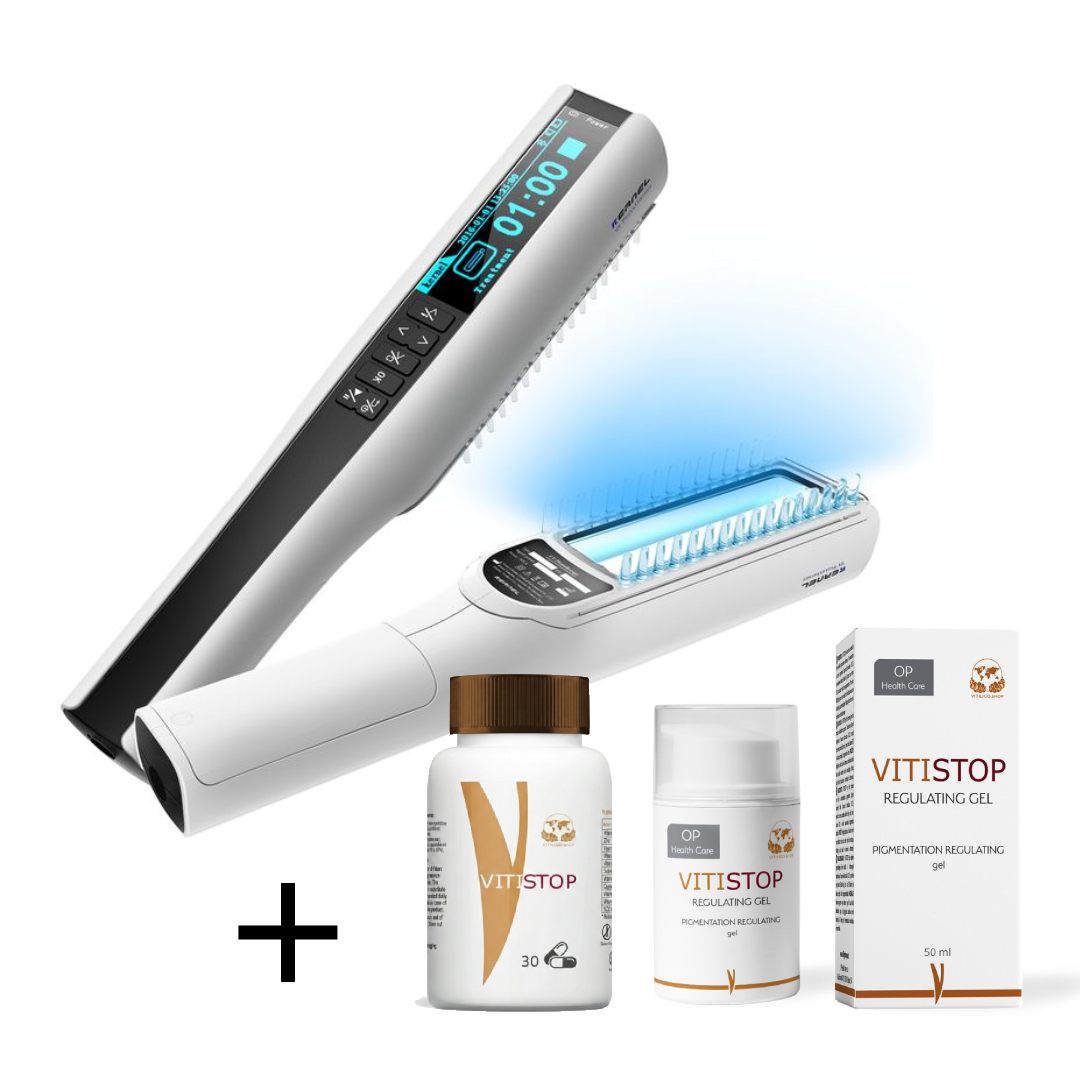
If your diagnosis is confirmed vitiligo, here are the two most effective approaches our customers use alongside medical care: