
Why Vitistop Gel
Vitistop Gel – faster, stronger repigmentation
The psoralen gel used in dermatology clinics, now part of your home routine. No prescription needed.
1 · The science
What studies say about psoralens and light
Psoralen + 311 nm NB-UVB vs NB-UVB alone. In a randomised trial, 40 patients with vitiligo had 60 NB-UVB sessions, half of them with psoralen. Put simply: over the same number of sessions, the patients who used psoralen with their light regained about a third more pigment than those who used light alone. Their colour also started coming back earlier, and the face, neck and hands responded best.
Bansal S, Sahoo B, Garg V. Photodermatology, Photoimmunology & Photomedicine, 2013, 29(6): 311–317. PubMed 24118425
NB-UVB is the best partner for psoralens. A 2026 systematic review of randomised trials found that NB-UVB, alone or combined with psoralen, gave better repigmentation than the older PUVA treatment (psoralen with UVA light). That is why we pair Vitistop Gel with 311 nm lamps or controlled sunlight.
de Lara Quagliotto G, et al. Dermato, 2026, 6(1): 5. doi:10.3390/dermato6010005
Plant psoralens and pigment cells. In laboratory tests, extract of Psoralea corylifolia seed, a classic natural source of psoralens, increased the growth of normal human pigment cells (melanocytes).
Open Chemistry (De Gruyter). doi:10.1515/chem-2022-0292
2 · Real results
Adam’s face: 100% repigmented in 8 months
Vitiligo covered around 80% of Adam’s face. For eight months he applied Vitistop Gel before every session with a 311 nm lamp and took Vitistop tablets. Tap a photo to enlarge it.

Before treatment
Light patches on the forehead, cheeks and around the mouth

During treatment · month 6
New pigment merging into solid areas

After 8 months
A face completely free of patches
Adam is a real customer and the photos are unedited. Results and the time needed for repigmentation vary from person to person.
3 · How to use
Your routine with a 311 nm NB-UVB lamp
- Apply a thin layer of Vitistop Gel to the white patches and wait about 30 minutes.
- Start with a short session: 30 seconds for adults, 15 seconds for children.
- If there is no redness after the previous session, add about 20 seconds next time, if your lamp instructions allow it.
- Aim for a mild pinkish redness only. If the skin stays clearly red, wait until it has fully recovered.
- Treat 2–3 times a week, with at least 48 hours between sessions.
- Over time a session per area is often around 3–4 minutes, depending on skin type and response.
Using sunlight instead of a lamp? Apply the gel the same way and keep sun time short and controlled, never letting the skin burn.
4 · Expert advice

“Since we added Vitistop Gel to phototherapy, pigment starts to return sooner and the treatment itself gives better results.”
Dr Michael Scheibenreif, consultant dermatologist, Clinical Lead and Medical Adviser at VitiligoShop since 2025. Years of clinical experience in phototherapy for vitiligo, psoriasis and atopic eczema, gained in spa clinics, hospitals and outpatient dermatology clinics. Ask us for advice →
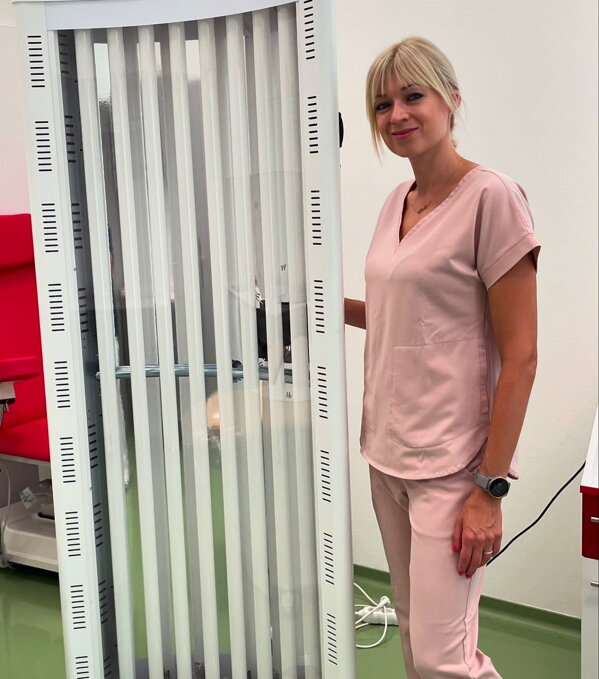
“Since we introduced Vitistop Gel into our phototherapy protocol, patients have needed noticeably shorter exposure times, and the first signs of repigmentation appear earlier.”
Dermanat clinic. Treats vitiligo and psoriasis with 311 nm NB-UVB phototherapy and uses Vitistop Gel alongside it in daily practice.
5 · Key ingredients
What is inside
- Psoralens from Babchi oil (Psoralea seed oil) – the key active ingredient. Babchi seed is one of the richest natural sources of psoralens (psoralen and isopsoralen), which make pigment cells respond more strongly to UVB light and sunlight.
- Superoxide dismutase (SOD) – helps neutralize free radicals and supports the skin's antioxidant balance.
- Copper and zinc – support important processes involved in normal melanin production.
- Vitamin B12 – contributes to normal skin function and processes linked to pigmentation.
- Calcium pantothenate – supports skin care and metabolic processes relevant to normal skin function.
6 · Safety and certificates
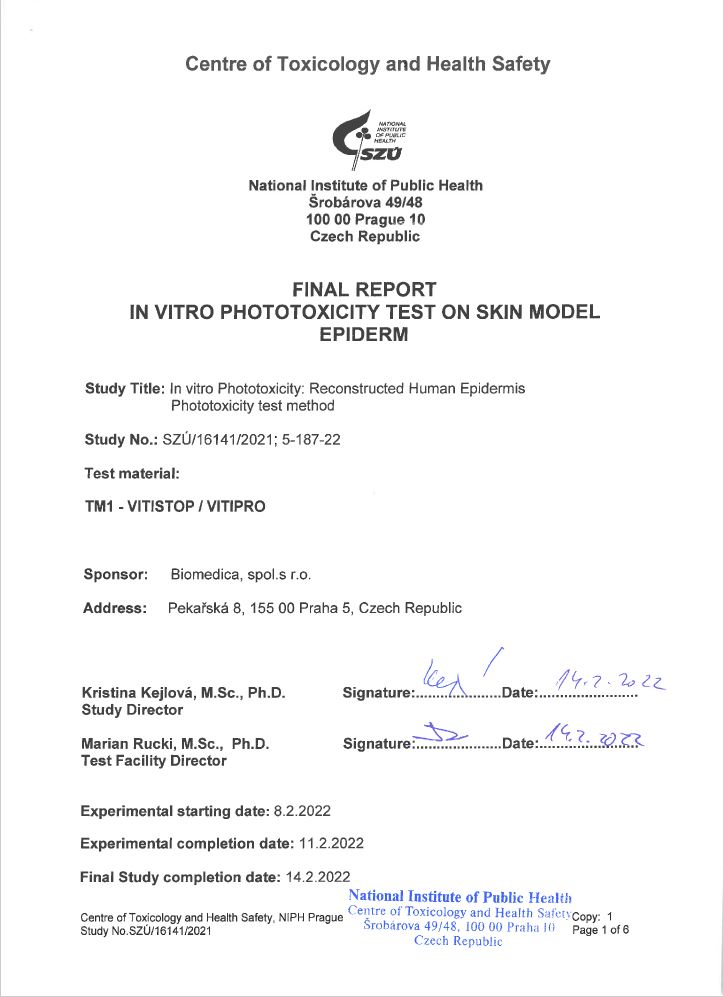
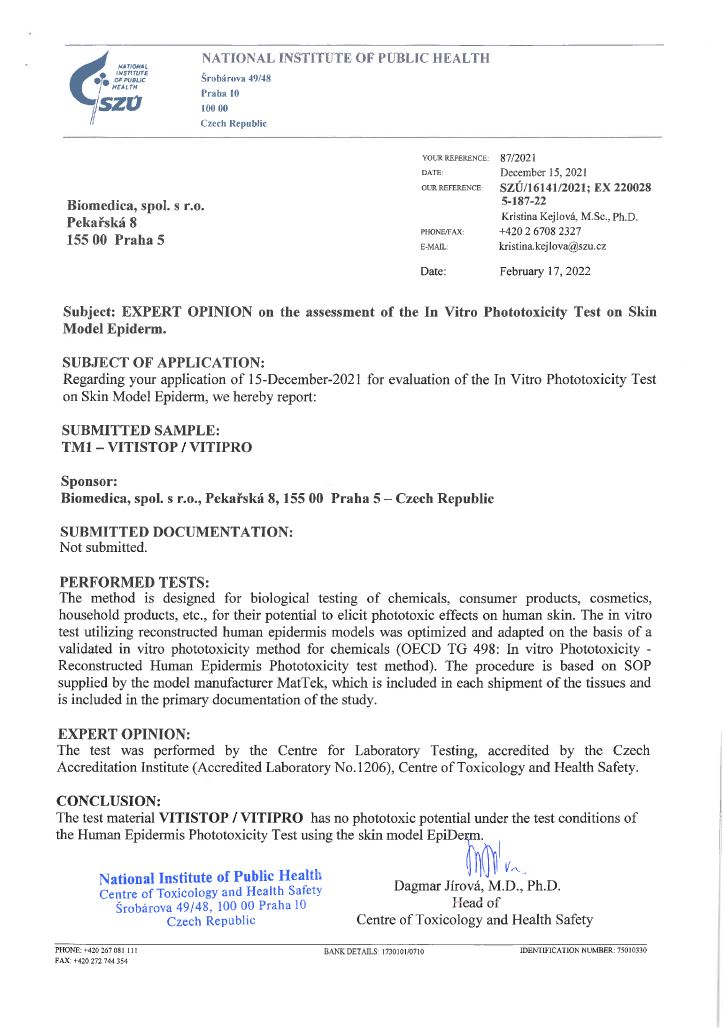
Certifications & Quality
Vitistop Gel is a dermatologically developed product manufactured to high quality standards. The certificates below confirm the product's composition, safety testing and compliance with applicable regulations.


Frequently Asked Questions
Answers to the most common questions about using Vitistop Gel for vitiligo.
What is Vitistop Gel used for?
Vitistop Gel is designed to support the skin's natural repigmentation process in people with vitiligo. It may help make lost skin pigment visible again, support melanocyte regeneration and activity, and slow the spread of vitiligo — particularly when used in combination with 311 nm narrowband UVB phototherapy or natural sunlight.
How does Vitistop Gel work?
Vitiligo develops when melanocytes — the cells responsible for skin pigment — lose their function or are damaged. Vitistop Gel contains a combination of natural extracts and active ingredients (Babchi oil, SOD, copper, zinc, vitamin B12) that support melanocyte activity and help promote a more even, natural-looking skin tone.
Can I use Vitistop Gel with a UVB lamp?
Yes — and this is one of the most effective ways to use it. Apply the gel to affected areas approximately 30 minutes before your UVB session. The combination of Vitistop Gel and 311 nm narrowband UVB phototherapy may significantly improve repigmentation results compared to either alone.
Can I use Vitistop Gel with natural sunlight?
Yes. Apply Vitistop Gel and wait about 30 minutes, then expose the treated skin to sunlight starting with 5 minutes. If there is no redness the next day, increase by 5 minutes per session — the target is typically 15–30 minutes in total. Protect the surrounding skin with SPF 50+ during the session and apply SPF 50+ to the patches once the measured exposure is over.
Is Vitistop Gel suitable for children?
Yes — Vitistop Gel is suitable for children aged 3 and over. For children, always start with shorter sun or UVB exposure times and monitor the skin's response carefully.
How long does it take to see results with Vitistop Gel?
Repigmentation is a gradual process. Most people begin to notice the first pigment dots appearing after 2–3 months of consistent use. More visible improvement typically takes 6–12 months. Face, neck and scalp tend to respond faster than hands and feet.
What is the difference between Vitistop Gel and Vitistop Tablets?
Vitistop Gel is a topical product applied directly to affected skin areas. Vitistop Tablets are an oral supplement that supports vitiligo treatment from within — providing antioxidants, L-Tyrosine and key vitamins and minerals. Many customers use both products together for the best overall results.
Which size of Vitistop Gel should I choose?
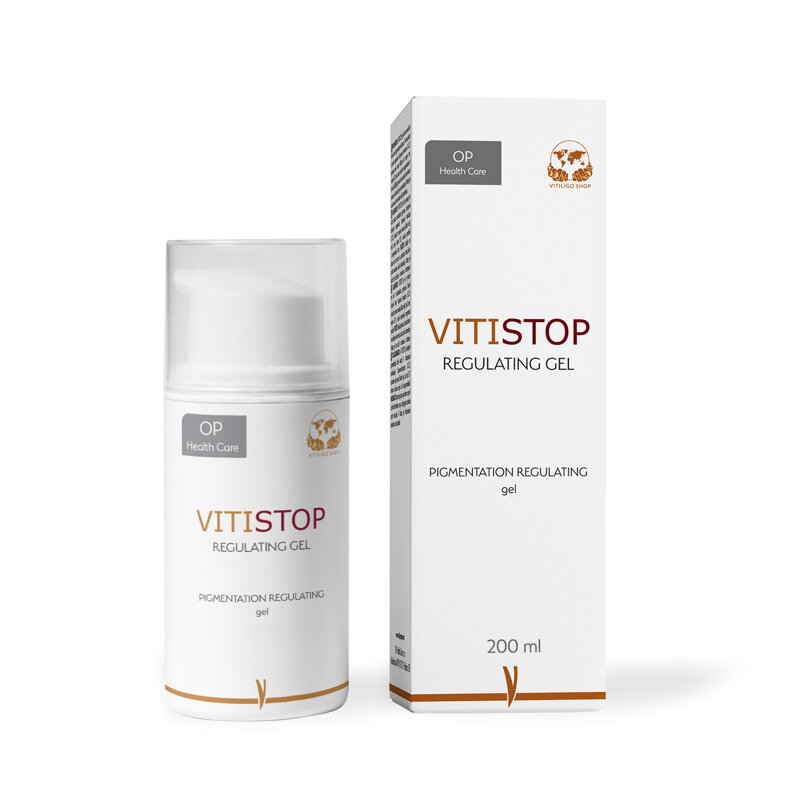
The 50 ml size is ideal if you are trying Vitistop Gel for the first time or treating a small area. The 100 ml is recommended for medium-sized areas or regular ongoing use. The 200 ml offers the best value for extensive areas or long-term treatment.
Can I use Vitistop Gel on my face?
Yes — Vitistop Gel can be applied to facial areas. Avoid contact with the eyes and mucous membranes. When exposing the face to sunlight or UVB after application, always protect the eyes with UV-protective goggles.


$129.90


New comment